
Basic education in music
Comprehensive syllabus for basic education in music Pop & Jazz Conservatory is a purposeful pursuit of music. Basic arts education prepares students for a lifelong interest in music and for professional studies in music.
Studying at the Pop & Jazz Conservatory is a so-called broad curriculum. This means that each student’s studies include the study of his or her own instrument, music literacy, the history of Western popular music and playing together.
You can choose your favourite instrument from a wide range of instruments:
- Wind instruments:
flute, saxophone, trombone, trumpet - String instruments:
electric guitar, electric bass, double bass - Percussion instruments:
percussion, mallets, drum kit - Piano
- Singing
Study methods
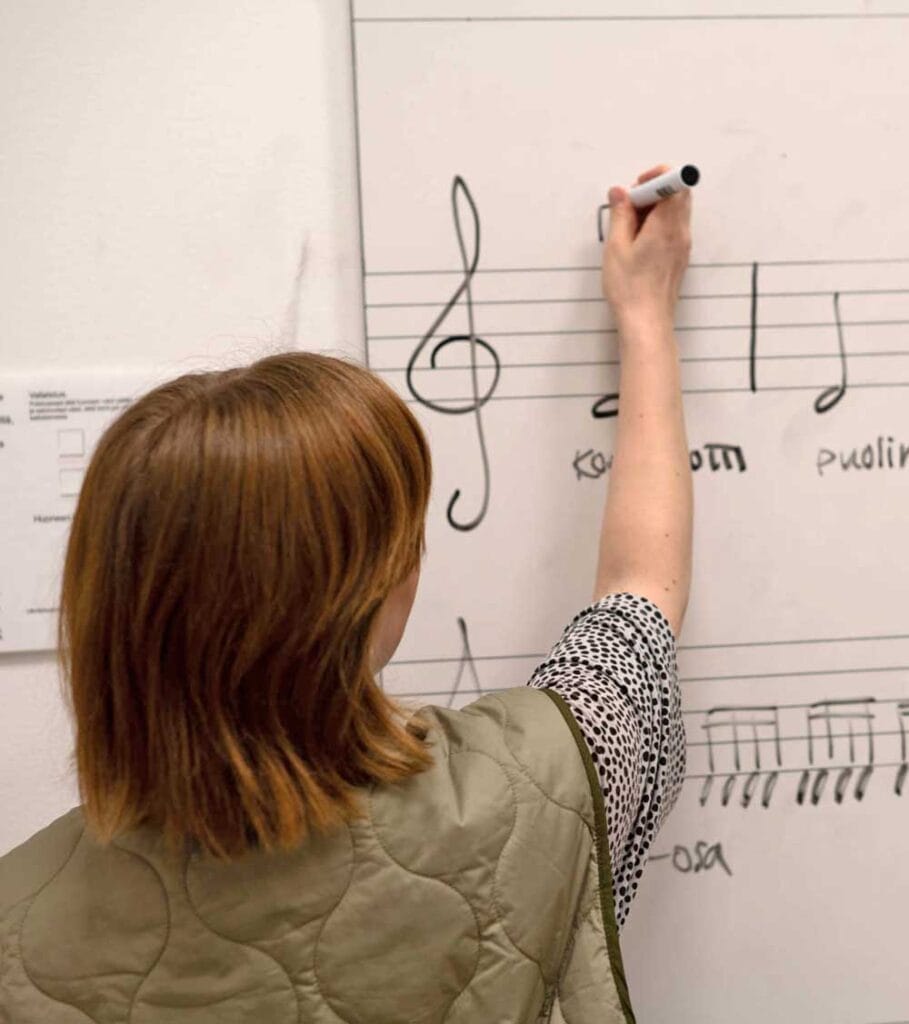
Group instruction is a central part of the Basic Education in the Arts programme at the Pop & Jazz Conservatory. All students are placed in ensembles that rehearse together weekly and perform in concerts and instrument matinees. Weekly studies also include classes in music theory and musicianship.
Basic education in music also includes instrument lessons as individual tuition.
The Western Popular Music course includes the history of African-American music. The course is compulsory and is taken during the undergraduate studies.
Each student proceeds at a pace that suits him or her and the situation.
Application guidelines for basic art education in music
Applications to the Pop & Jazz Conservatoire’s basic music studies in instrumental and vocal arts are made through student selection. New students will be admitted to fill any vacancies.
Before you apply, take some time to think about which instrument interests you. The instruments taught at the Pop & Jazz Conservatory include piano, flute, voice, percussion, mallet, trombone, drums, saxophone, electric bass and double bass, electric guitar and trumpet. The most popular instruments are piano and drums – there are always more applicants than places available. Good alternatives include wind instruments or electric bass.
There is no fee for the aptitude test.
>> Read the application instructions and apply for basic education in arts.
Aptitude test
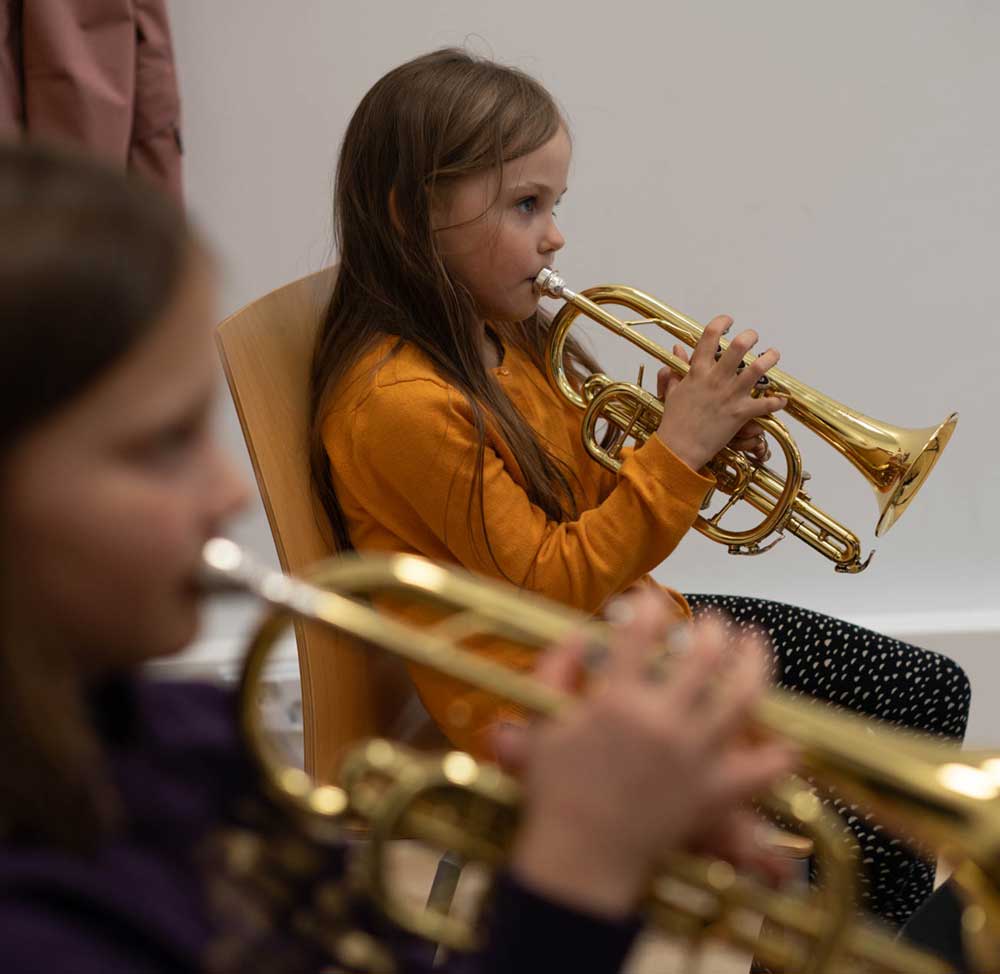
The Pop & Jazz Conservatoire’s basic music aptitude test is open to students over 10 years old and to those aged 7-9 who are applying directly for an instrument. Students are selected through an aptitude test according to their age group. The age groups for the aptitude test in basic education are:
- 8-9 years old
- 10-12 year olds
- 13-15 year olds
- 16 years and over
The aptitude test measures applicants ability to study music by means of a few rhythm and melody exercises, a sample (a short piece on your own instrument) and a short interview. For non-singing applicants, we do not require a singing sample.
In the aptitude test, the candidate plays a piece of his/her choice on his/her instrument, which he/she believes will enable him/her to express the best of his/her current musical ability. There is no restriction on the style of the song. If you have not previously played the instrument for which you are applying, you may sing or play another instrument instead.
The aptitude test for basic education in music contains repetition tasks that do not require music reading skills. The teacher plays, recites or claps for the applicant on the piano, and the applicant repeats the tasks by imitating them without the instrument.
The aptitude test also includes an interview to find out about the applicant’s potential, musical preferences, playing background, motivation and personal wishes and needs.
The teacher assessing the aptitude test will give points mark the sections according to the table below.
- Rhythmic repetition tasks 0-4 points
- Melodic repetition tasks 0-4 points
- Instrumental sample (non-singers): 0-5 points
- Singing sample (singers) 0-5 points
- Interview, 0-1 points
Nuorisokuoro Swingin osalta arvioiva opettaja pisteyttää tehtäväosiot seuraavasti:
- Rhythmic repetition tasks 0–4 points
- Melodic repetition tasks 0-4 points
- Singing sample e 0–5 points
- Part-singing excercise 0–4 points
- Interview 0–1 points
You can be admitted directly to basic education in music from preparatory instrumental training without a separate aptitude test if the instrument of your instrumental coaching is flute, percussion, mallet, trombone, saxophone, electric bass, electric guitar or trumpet. If the instrument of choice is a vocal instrument or a particularly popular instrument such as drums or piano, the pupil must register for the next possible aptitude test. Any places available in the basic education in music will be filled on the basis of the test.
The aptitude test will be held in our Soiva building in Arabianranta, address Muotoilijankatu 1 B, 00560 Helsinki. Check the confirmation email for the personal time and category you booked. If you are unsure where to go, you can ask the caretakers’ information desk in the main lobby of the Pop & Jazz Conservatory for the location of your class.
Instrument-specific instructions
Applicants are requested to inform in advance if they require an accompanist for the aptitude test. If piano accompaniment is needed, the applicant must submit the accompaniment sheet music beforehand, transposed into a key that is suitable for their voice.
The accompaniment score must have chord symbols. The applicant may also use his own accompanist or accompany the piece himself on the piano present. If the applicant uses another instrument to accompany him/herself, the instrument must be brought along.
The use of a backing track as accompaniment is allowed, for example, a karaoke or playalong backing track from your laptop or phone may be used. The suitability test category includes a mini-plug cable to allow the song to be heard through the speakers. Note: If the device you are using does not have a stereo mini-plug output, i.e. a headphone jack, you will need to provide your own adapter.
Singing. Applicants for the voice programme are required to perform one piece of their own choice from memory, without using sheet music or lyric sheets. No microphone is used during the performance. If the applicant also wishes to apply to Youth Choir Swing, please refer to the choir aptitude test instructions. Please note that the voice aptitude test alone does not qualify an applicant for admission to the choir.
Choir. Applicants to Youth Choir Swing are required to perform one piece of their own choice from memory, without using sheet music or lyric sheets. No microphone is used during the performance. In addition, applicants complete a part-singing exercise, for which instructions and materials are available via this link. The choir aptitude test can also be used as an application for the voice programme.
Drums. Drummers use the instruments provided by the Pop & Jazz Conservatory. Applicants must bring their own drumsticks to the aptitude test.
Piano. Pianists perform on an instrument provided by the Pop & Jazz Conservatory.
Electric Guitar and Electric Bass. Guitarists and bassists must bring their own instrument cable. Applicants may also use an electric guitar or electric bass provided by the Pop & Jazz Conservatory if they wish. Guitar and bass amplifiers are available in the test room. Applicants are generally expected to perform on the instrument for which they are applying, but the performance may also be given on another string instrument.
Wind Instruments. Wind players must bring their own instrument to the aptitude test.
Student selection criteria
In the rhythm and melody exercises, the score is based on the number of successful repetitions of rhythm and melody figures. In the singing test (applicants for the singing test), the assessment will be based on the purity of tune, musical expression, singing by heart, stylistic consistency, variation in singing, nuances of vocal use and interpretation.
The scoring of the performance will take into account whether and to what level the applicant has the ability to play the instrument, whether the performance remains coherent, whether the performance is complete and whether it includes interpretation.
In the selection of students for basic education in music, the total score obtained in the test is compared with other applicants of the same age group and instrument. The aim is to select a pupil who is of an appropriate age, level, motivation and commitment for the group to be formed.
The scoring of the interview is based on the impression of the candidate’s suitability, motivation and commitment. Personal preferences and needs do not affect the scores, but will be taken into account where possible: for example, musical preferences, teacher preferences, etc.
Due to the limited number of student places available, it is possible that an applicant cannot be offered a place in basic education in music, even if they meet all the requirements for music. In such a situation, the applicant will be on the waiting list and, if a suitable group is found, a place will be offered immediately. This can happen at any point in the academic year and does not oblige you to accept a place.
>> Read the application instructions and apply for basic education in arts.